
 IN DEVELOPMENT
What the next team does, and how we know.
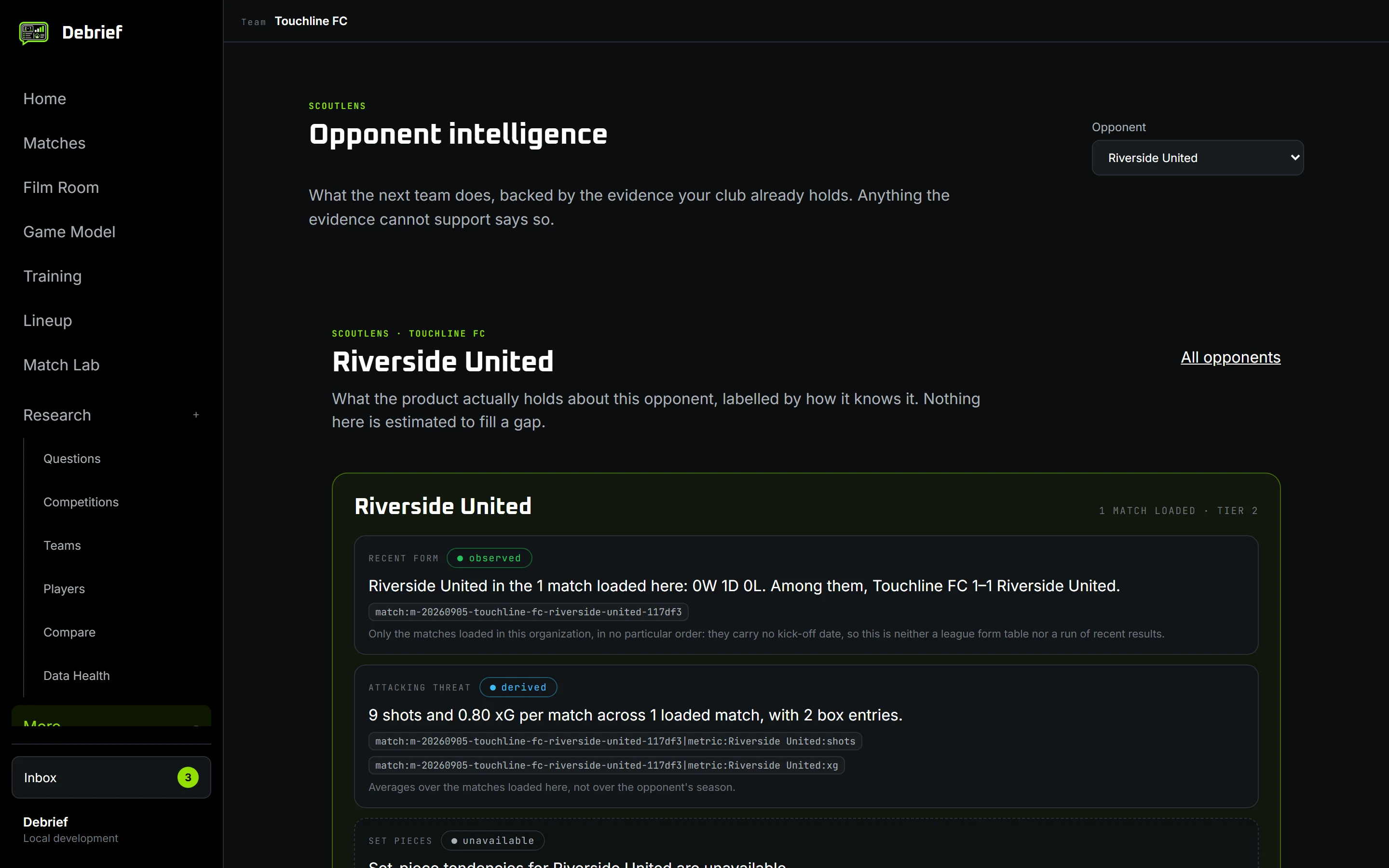
ScoutLens turns the evidence your club already holds into a picture of the opponent you are about to play, so the match plan starts from something firmer than a memory of the reverse fixture.
The opponent card
Five things about the next team, each one carrying the evidence it came from and how firmly it should be read. It is written to be read on the way to training, not studied.
The profile underneath
Recent form, where they attack, how they press, what they do at set pieces: the working behind the card, for when a coach wants to argue with it.
It says when it cannot say
A claim the evidence cannot support is marked unavailable rather than softened into a guess. Five confident bullets about a team we have three matches of are worse than two honest ones.
Where it actually is
The opponent card and the profile behind it are built and tested, and they run inside the app today behind a switch. What is still moving is the analysis they read: the competition intelligence is being ported across engine by engine, and each piece has to reproduce its reference fixture before it counts. Until that is finished ScoutLens is not something we would sell you.
What that means for a pilot club
If you are already using Debrief and want the opponent card switched on for your club while it is still being finished, say so and we will talk about it. You would be looking at real output on your own fixtures, with the parts that are not ready clearly marked as unavailable.
Part of the suite
ScoutLens is one of the two views through PitchView, the layer that holds what actually happened and what it can stand on. The other is PlayerPath, which looks at the player rather than the opponent.