
 IN DEVELOPMENT
Where each player is, and where they are going.
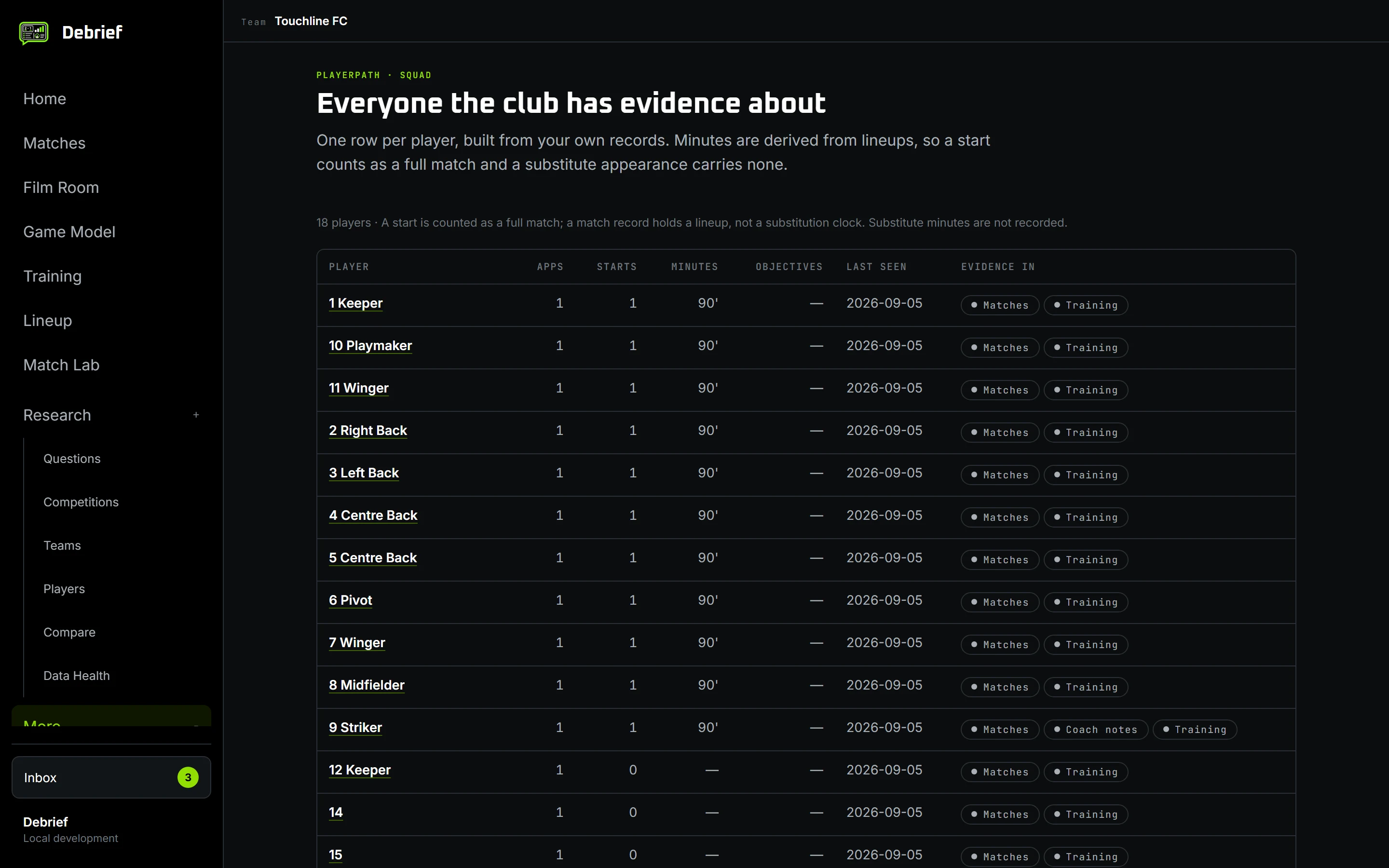
PlayerPath gathers everything your club has already recorded about a player into one line through the season, so a development conversation starts from evidence rather than from memory.
Built from what you already wrote
A player appears because your club wrote something about them: a match lineup, a session, an objective, a coach's note after training. Nobody is entered twice, and nobody is entered by hand.
The season, as a line
Every appearance in order, a start distinguished from a substitute appearance. It is involvement, not a rating: we are not going to invent a score for a fifteen-year-old.
Minutes that admit what they are
A match record holds a lineup, not a substitution clock. So a start is reported as an assumed full match and a substitute appearance carries no minutes at all, and both say which they are.
A report you can hand over
One page per player for a parents' evening or an end-of-season review, printed from the same evidence, with nothing on it the club cannot point at.
Where it actually is
The squad list, the player’s path and the printable report are built and tested, and they run inside the app today. What is not finished is identity: players are matched by name, which is right for a club that writes them consistently and wrong for one that does not. Stored player profiles, which pin a player across spellings, squad numbers and seasons, are written but not yet in use at a real club.
What that means for a pilot club
It works today if your team sheets spell people the same way. We would rather set it up with you and watch that assumption than sell it and find out.
Part of the suite
PlayerPath is one of the two views through PitchView, the layer that holds what actually happened. Objectives written from a finding in Debrief land on a player’s path, and the training that targeted them comes from Whiteboard.